Archive for the 'peevishness' Category

Happy Chrono-Solsticial Pi Day

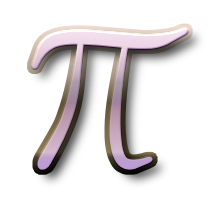
Sun on the Winter Solstice, 2006 C.E.Today, is, of course, the day when we have progressed through one pi-th of the time between the last winter solstice and the next. Vulgar Pi Day is observed by plebes and math groupies on, depressingly, 3/14. As has been discussed previously in this forum, the true, transcendal observance requires a bit more thought.

Writing these few sentences has sorely taxed my depleted mental resources. What little remains of my sanity must be preserved for the final qualifying exam I shall be taking tomorrow afternoon. Soon, this ordeal will be over, to be replaced a completely new and more complicated ordeal. Huzzah!

(Image of the sun on the winter solstice, 2006 C.E. courtesy of geo3pea.)

Comments

More Obsessiveness: Name That Tune

As a change-up from audiobooks, I’ve lately been listening to a fair number of podcasts. While working my way through the back archives of one show, I was struck by a dreadful piece of synthesized harpsichord music used to introduce one of the segments. That is to say, it was a perfectly pleasant Baroque passage, but the rendering was, well, heinous.

While the synthesis of instruments has greatly advanced since the seventies, the person who coded up that harpsichord wasn’t even trying. Worse, there were some seriously infelicities of timing, where whoever was playing the keyboard had stumbled slightly.

All of the above might be tolerated for a repetition or two, but after the twelfth or so I was contemplating ripping my (or perhaps someone else’s) ears off. Still, distressing as the synth harpsichord was, I had a worse source of dismay: I could not identify the composer.

The piece was extremely familiar, but I couldn’t slot it into any of my memories. Bach? Telemann? It was light and familiar, could it perhaps be Mozart? My recall system was coming up with nothing useful.

Clearly, surfing through PDFs of musical scores was not going to be an efficient system of identification. There’s been quite a bit of work done around automatically identifying particular recordings, such as that which resulted in the unfortunate publicity for the husband of late Joyce Hatto (he had been passing off other artists’ recordings as hers).

Unfortunately, I was working from a one-off synth rendering, so that approach was out. Let’s see, it goes da-da-deedle-DAH-DAH-DAH-dah-dah-dah-dah. What can I do with that?
It turns out, rather a lot. With the right website, you can leverage the memory a melody into an identification. I found two sites that profess to identify music from a few notes: Musipedia and TuneTeller.

Musipedia.org

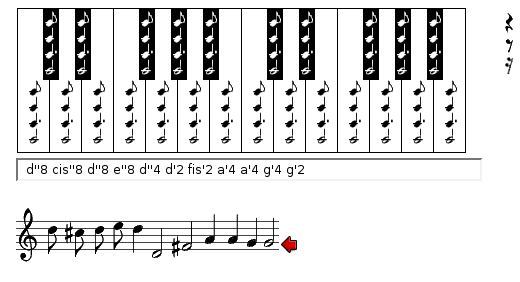
Musipedia Interface

I didn’t have good luck with Musipedia, which was far too optimistic in its matching. Its number-one suggestion (”The Poker Party Polka”) was not exactly what I remembered. Nor was it “Blowin’ in the Wind”, nor Verdi, nor Schubert, nor Bartók, nor any of the next fifty suggestions. Musipedia was clearly not going to cut it. I did try some of other forms of searching (contour and rhythm searches) without success. Interestingly, they do have a “sing or whistle” search, but I was disenchanted with Musipedia by that point.

TuneTeller.com

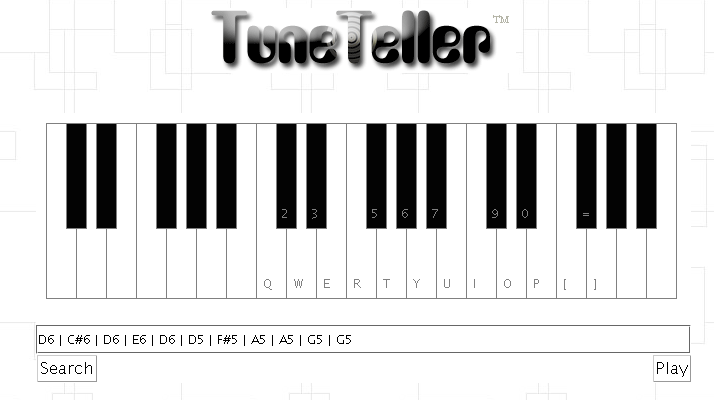
TuneTeller Interface

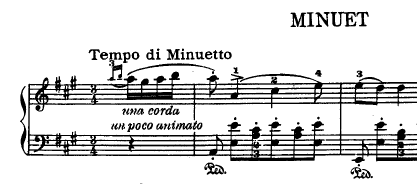
On the other hand, TuneTeller popped it up on the second try. The first time, it complained because I had entered too much of the melody; it apparently works best with just a few bars. Moments later, I had my answer: it is a minuet by Luigi Boccherini; in fact, just about the only piece he wrote which is still at all well-known.
Boccherini Minuet

Thanks to the Internet, I can sleep at night.

Comments

Words and Obsession

If you are at all obsessive, I’m sure you know well the gnawing feeling of dissatisfaction that arises when something just isn’t right. For me, that something is often a problem of knowledge: something I don’t know, something I can’t figure out, or (worst of all) something I’ve forgotten. It can strike without warning, a whim of iron that crowds out all other thought until it is satisifed.

Over time, one develops a pattern of strategies for dealing with the most common of these eventualities. Chief among my precautions, I try to make sure that I’m never more than arm’s length from a dictionary. Even for words I know, I am often seized by the need to verify shades of connotation.

Ah, dictionaries. Having the right edition at hand is indispensable.

I have little good to say about the standard American dictionaries. The glib banalities of Merriam-Webster and American Heritage only reinforce the apathy of most students toward the treasure-house of language. We shall speak of them no more.

More pleasingly, consider the OED. The full, twenty-volume edition is, alas, horrifically expensive and unwieldy. The single-volume, photo-reduced, Compact OED is too crabbed and inacessible to be a pleasure. Don’t get me wrong, you need a copy of the OED, but find yourself a copy of the older, two-volume Compact with only four pages-per-page. Despite its necessity, the OED is not for quick reference; its dark vortex will suck you into the fifty near-variants of a single word, leading to an afternoon of scholarly enjoyment that is incompatible with actually finishing whatever writing task you were previously attempting to complete.

Allow me to commend to you the best single-volume English dictionary for ready reference: the Chambers, which is an unmitigated pleasure. It is accessible, engaging, and playful without sacrificing the richness of linguistic history. Consider, for example, the entry for weasel words:

weasel words plural noun words used to deliberately make statements evasive or misleading.

Etymology: Early 20c: such words suck the meaning out of neighbouring words in the way a weasel sucks the contents out of an egg, leaving the shell empty.

One skates stutteringly through the Chambers, tripping on something interesting a dozen times on your way to your goal, building a ramified stack of serendipitous discoveries to trace down.

A final, minatory note: avoid the disappointments of the Chambers 21st Century Dictionary and the Pocket Chambers. The Chambers 21st Century is sadly vitiated, stripped of the most pleasing archaisms and much of its character. The Pocket Chambers is simply pointless, as it chooses to omit any word for which you might actually need a definition.

Comments

The Irrationality of Pi Day

Pi

(Update 2007-03-16: See the end for revised time; the chronological calculation should of course be from solstice to solstice, not based on an arbitrary “year”.)

Slashdot just reminded me that March 14 is celebrated as Pi Day. 3/14? How gauche. 1:59pm? Local time?

Bollocks.

The commemoration of a transcendental constant should not be tied to the grubby political vagaries that resulted in the Gregorian calendar’s accidents of number. Even worse, most of the world will write it as 14/3, which seems a bit depressing. (Even if the Europeans go for a Pi Approximation Day on 22 July, it doesn’t really improve matters.)

Those of us who truly appreciate pi should pick a more meaningful moment. There are plenty of candidates.
We’d like this to happen once a year so picking a chronological basis seems reasonable: how about when 1/pi-th of the year has elapsed?

At times like this, I turn to Frink.

> 1 year / pi -> days
116.26020272349755797

So, 116 days after the start of the year? That seems like a good start. Let’s see, as a date, that would be:

> #2007-01-01# + (1 year / pi) -> UTC
AD 2007-04-27 01:14:41.515 PM (Fri) Coordinated Universal Time

Now we’re getting somewhere! Let’s check what this works out to for the East Coast of the US:

> #2007-01-01# + (1 year / pi) -> EST
AD 2007-04-27 08:14:41.515 AM (Fri) Eastern Standard Time

Fair enough. Still, basing it off of the Gregorian New Year still seems pretty absurd. Let’s pick something tied to something observable. The winter solstice seems like a pretty good candidate.

According to the US Naval Observatory, the 2006 winter solstice was at Dec 22 at 00:22 UTC. The table is only accurate to the minute, so (assuming rounding rather than truncation) we’ll have to accept +/- 30 seconds of slop in our calculations.

> # 2006-12-22 12:22 AM UTC # + (1 year / pi) -> UTC
AD 2007-04-17 06:36:41.515 AM (Tue) Coordinated Universal Time
> # 2006-12-22 12:22 AM UTC # + (1 year / pi) -> EST
AD 2007-04-17 01:36:41.515 AM (Tue) Eastern Standard Time

Hm, you could certainly manage a celebratory drink around that time. Sadly, that’s 6 AM in the UK, which is much less congenial; consider scheduling a Pi Day-hangover for that time. On the other hand, it’s 3 PM on Tuesday in Japan.

A possible improvement would be to define the “Pi Point” from the physics of the Earth’s orbit, say, when the Earth has proceeded through 1/pi-th of its path around the Sun. In this case, picking perihelion (the closest approach of the Earth to the Sun) as the starting point would seem to be a good choice. 2007’s perihelion occurred on January 3. The Naval Observatory’s tables are only precise to the hour, so we just know it was sometime around 20:00 UTC.

Earth’s mean orbital velocity is 29.79 km/second. Unfortunately, that’s not enough information. Kepler’s Second Law tells us that the orbital velocity is not constant, and planets move faster while they are closer to the sun. This exceeds my present research . . . working this one out will require some astrophysical chops. (After writing this, I discovered than Wikipedia mentions April 26 as the date when “the distance of the Earth’s orbit divided by the time it has traveled so far is equal to pi”, so I’m not the first to tread these waters.)

For now, though, let us remember: the vulgar Pi Day is meant to deceive, drawing our eyes to the shadows cast by a shallow culture, away from Platonic Truth! Our arbitrary choices have revealed the TRUE Pi Day as April 17, 2007, with the chronosolsticial Pi Point occurring close to 06:36:41 UTC (+/- 30 seconds). Hoist a few pints in its honor; it doesn’t matter how many, as long as it’s a round number and enough to get you feeling a bit irrational.

Updated calculation: Rather than “1 year”, we need to calculate from solstice to solstice. The 2007 winter solstice will be on December 22 at 6:22 UTC. So:

> # 2006-12-22 12:22 AM UTC # + ((#2007-12-22 06:22 AM UTC# - #2006-12-22 12:22 AM#) / pi) -> UTC
AD 2007-04-17 04:26:34.655 AM (Tue) Coordinated Universal Time
> # 2006-12-22 12:22 AM UTC # + ((#2007-12-22 06:22 AM UTC# - #2006-12-22 12:22 AM#) / pi) -> EST
AD 2007-04-16 11:26:34.655 PM (Mon) Eastern Standard Time

Further updates to follow as imperfections are revealed and stripped away.

Comments


dd